
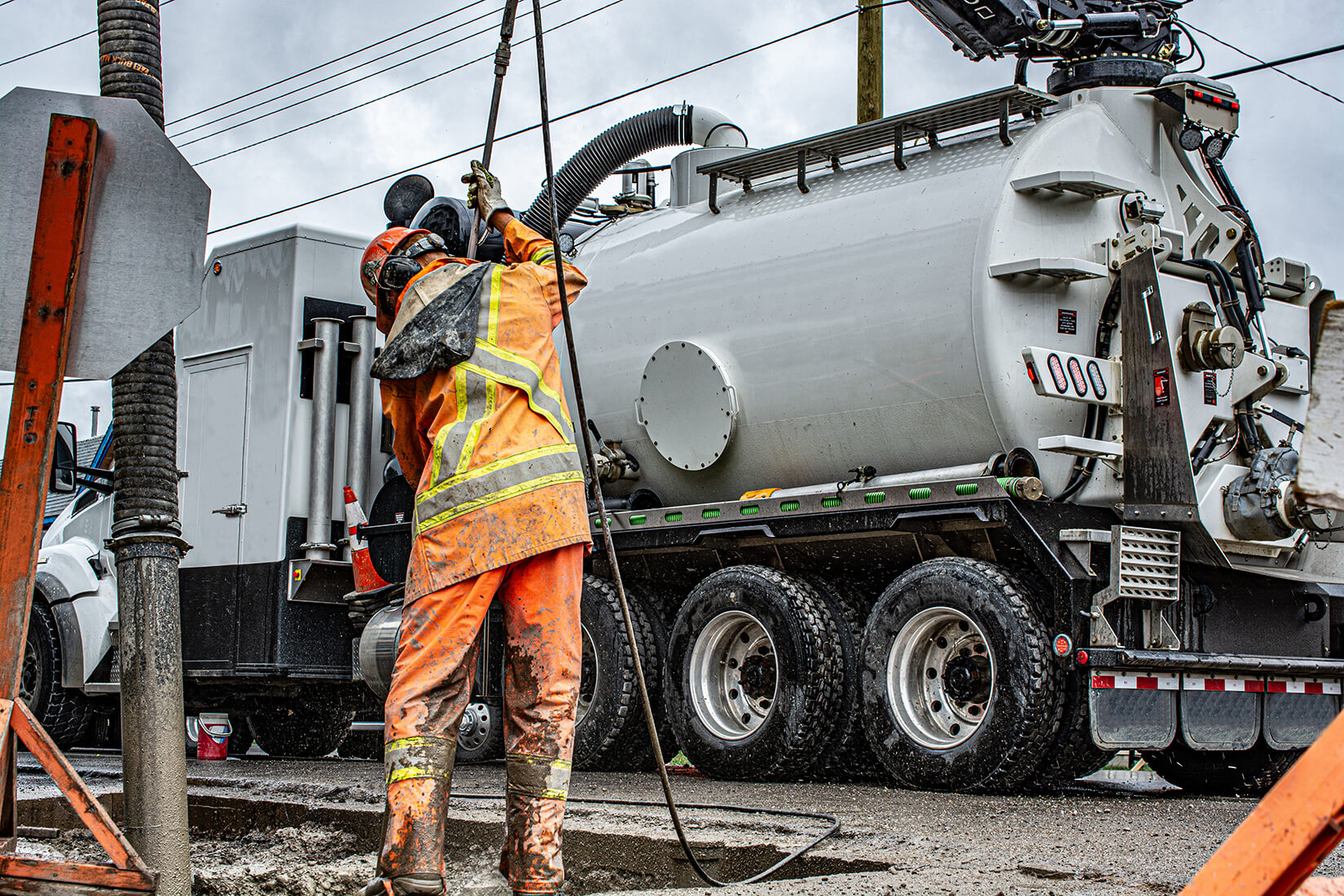
Not every excavation job happens in an open field with room for heavy equipment. In fact, many of the most critical hydrovac excavation projects occur in places where access is limited, visibility is poor, and disruption is not an option. Rooftops, alleyways, courtyards, interior urban corridors, landscaped areas, and tight right-of-ways all present unique challenges that traditional excavation equipment simply can’t handle.
This is where remote-access hydrovac excavation becomes essential, and why compact hydrovac trucks are changing how excavation work gets done in Colorado. For those looking for “hydrovac truck services near me” in Colorado, we offer a simple, elegant solution for far-off excavation.
The Access Problem in Modern Excavation
As cities grow denser and infrastructure ages, excavation work increasingly happens in confined, sensitive, or high-traffic environments. Utilities need to be exposed without shutting down streets. Drainage systems need maintenance without tearing up landscaping. Emergency repairs need to happen without blocking access to buildings or disrupting daily operations.
Traditional excavation equipment struggles in these conditions. Backhoes and trenchers require space, stable ground, and clear access paths. Even standard hydrovac trucks can be limited by size, weight, and turning radius.
Remote-access hydrovac excavation solves this problem by separating where the truck is parked from where the excavation happens.
What Is Remote-Access Hydrovac Excavation?
Remote-access hydrovac excavation refers to the ability to perform hydrovac work away from the truck’s physical location. Instead of positioning the vehicle directly over the dig site, operators can reach the excavation area using flexible vacuum and water delivery systems while keeping the truck safely staged elsewhere.
This approach is especially effective when paired with compact hydrovac trucks, which are designed to operate in tight environments while still delivering powerful excavation performance.
Rather than focusing solely on hose length, modern remote-access hydrovac relies on thoughtful equipment design, operator experience, and site planning to safely reach areas that were once considered inaccessible.
Why Compact Hydrovac Trucks Matter More Than Hose Length
While long hose extensions have traditionally been the solution for remote access, compact hydrovac trucks change the equation entirely.
A smaller, more maneuverable hydrovac unit can get closer to the work area in the first place. This reduces setup complexity, improves suction efficiency, and lowers overall risk on the jobsite.
Compact hydrovac trucks are particularly valuable in environments like downtown Denver, older neighborhoods, and mixed-use developments where space is limited and infrastructure is tightly packed.
They allow crews to work inside courtyards, behind buildings, on rooftops, and within fenced or landscaped areas without removing obstacles or damaging surroundings.
How Remote-Access Hydrovac Works in Practice
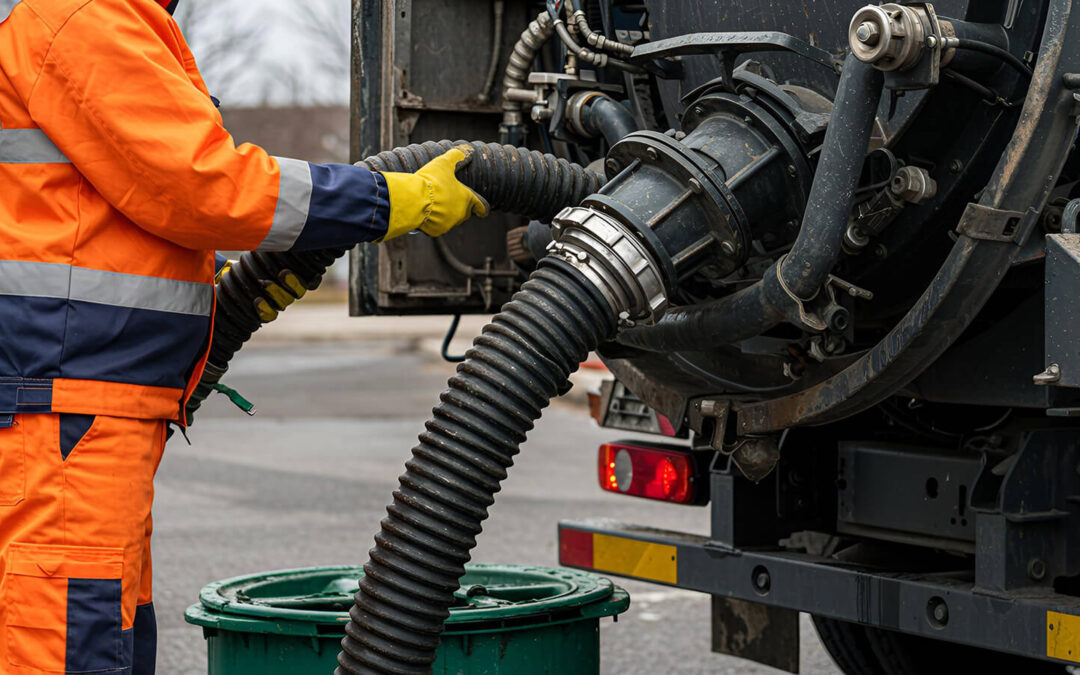
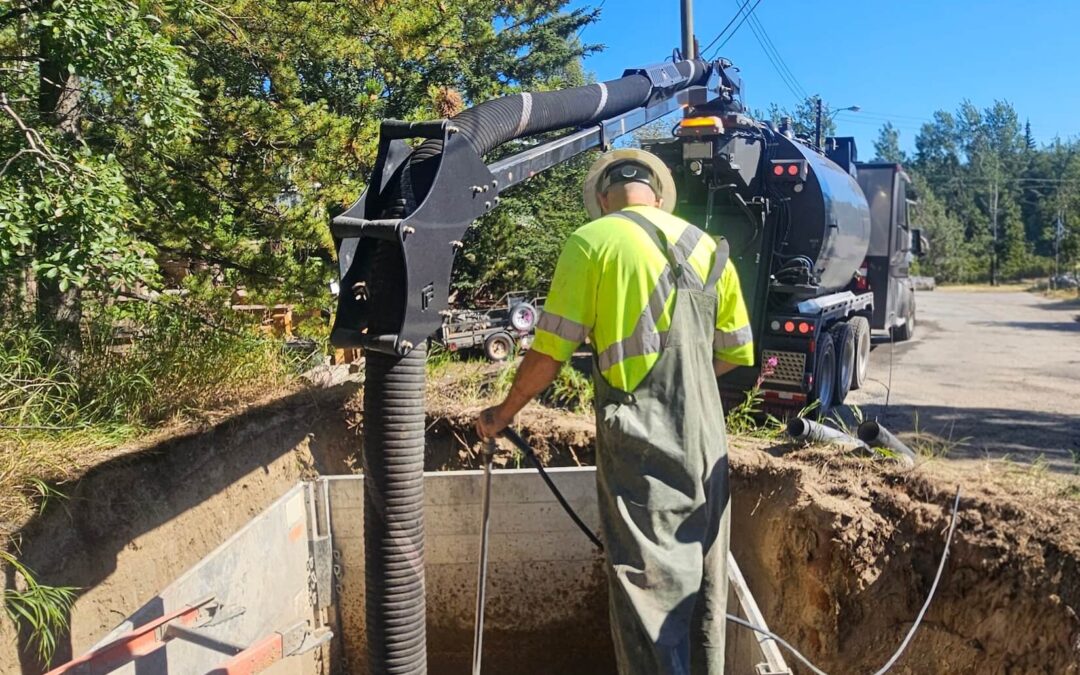
Remote-access hydrovac excavation still follows the same fundamental process as standard hydrovac work. High-pressure water is used to loosen soil or debris, and a powerful vacuum removes the material into a sealed debris tank. The difference lies in how the system is deployed.
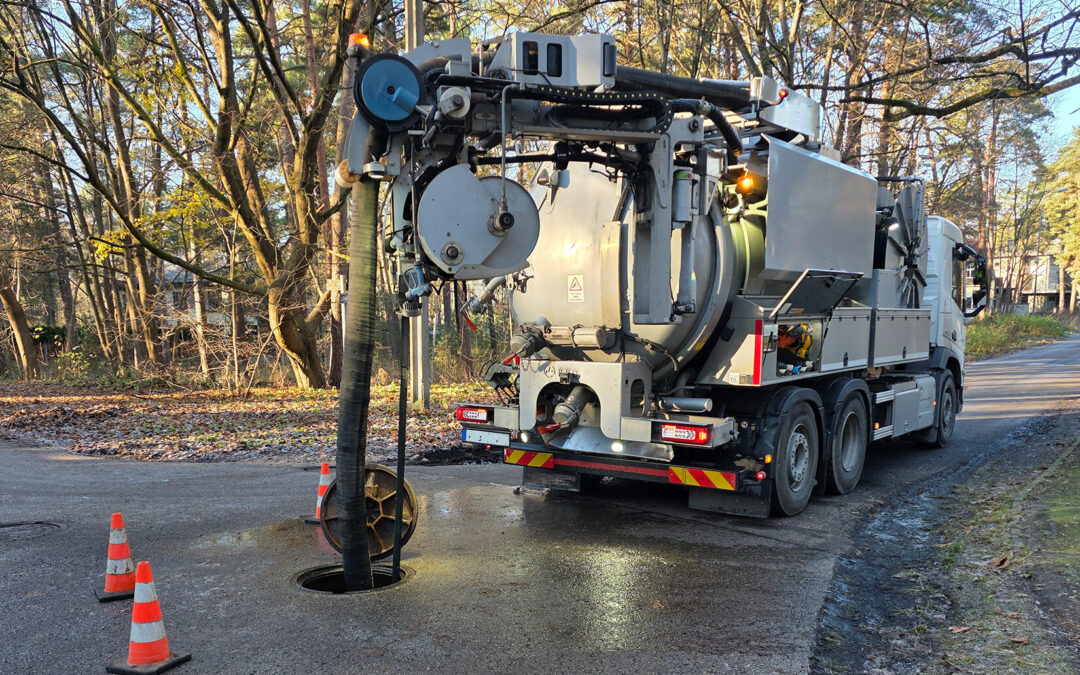
With a compact hydrovac truck, operators can stage the vehicle in a safe, accessible location — such as a side street, service road, or parking area — while routing the excavation equipment to the exact point of work. This allows for precise excavation without the need to bring heavy machinery into fragile or restricted spaces.
The result is cleaner work, less surface disruption, and greater flexibility in how projects are executed.
Common Applications for Remote-Access Hydrovac Excavation
Remote-access hydrovac excavation is increasingly used in situations where traditional access would be costly, disruptive, or unsafe.
Rooftop projects are a prime example. Removing soil, growing media, or debris from rooftop planters or drainage systems often requires careful weight management and limited access paths. Compact hydrovac trucks allow crews to perform this work without cranes or manual hauling.
Urban utility daylighting is another common application. In dense city corridors, sidewalks and streets often can’t be shut down for excavation. Remote-access hydrovac allows utilities to be exposed from a distance, keeping traffic flowing and minimizing disruption.
Landscaped and finished environments also benefit from this approach. Courtyards, decorative ponds, plazas, and green spaces can be excavated or cleaned without destroying hardscaping, irrigation systems, or plantings.
Interior and secured sites, such as campuses, industrial facilities, and HOA-managed properties, also rely on remote-access hydrovac to maintain infrastructure without compromising access control or safety.
Performance Considerations: Does Distance Reduce Effectiveness?
One of the most common questions about remote-access hydrovac excavation is whether working farther from the truck reduces performance. The short answer is that equipment design and operator expertise matter more than raw distance.
Compact hydrovac trucks are engineered to maintain strong suction and consistent water pressure even when working remotely. When paired with proper hose management, controlled excavation techniques, and experienced operators, performance remains reliable and efficient.
In many cases, the ability to position the truck closer, thanks to its compact footprint, actually improves efficiency compared to larger trucks that are forced to remain farther away.
Safety Benefits of Remote-Access Hydrovac Excavation
Remote-access hydrovac excavation offers several important safety advantages.
Keeping heavy equipment out of tight or elevated areas reduces the risk of structural damage, ground failure, or worker injury. It also minimizes exposure to traffic, pedestrians, and other job-site hazards.
Because hydrovac excavation is non-destructive, it remains the safest method for working around unknown or sensitive utilities, especially in older areas where records may be incomplete.
For winter operations or emergency response, remote-access hydrovac allows work to proceed without waiting for full site access or extensive preparation.
Environmental and Compliance Advantages
From an environmental standpoint, remote-access hydrovac excavation aligns well with modern sustainability and compliance goals.
Material is removed cleanly and contained in sealed tanks, preventing runoff, spills, or sediment migration. This is particularly important for projects tied to stormwater systems, MS4 permits, or sensitive waterways.
Minimal surface disturbance also means faster restoration and less long-term impact to the surrounding environment.
How Biolein Uses Compact Hydrovac Trucks for Remote Access
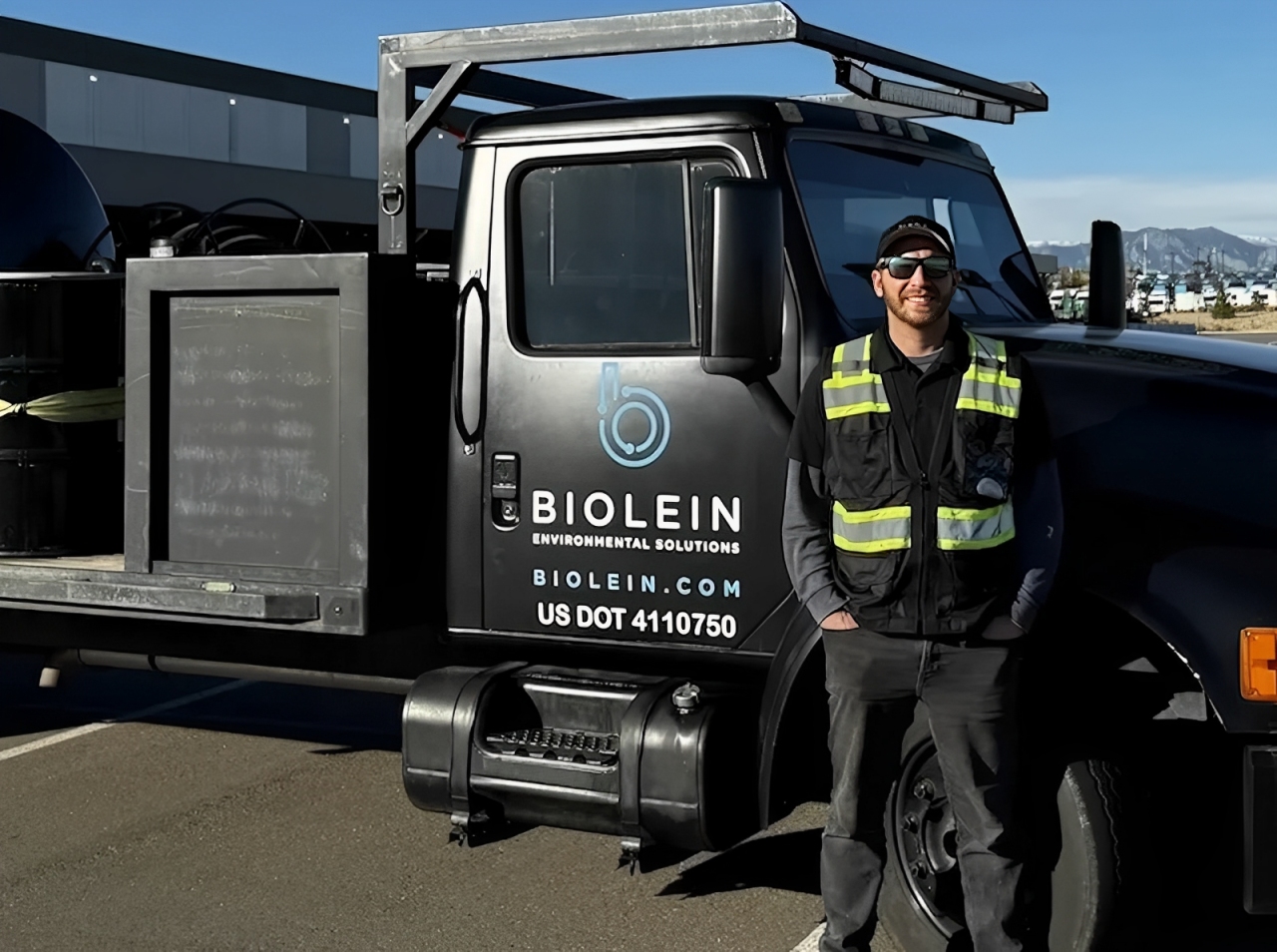
Biolein has invested in compact hydrovac equipment specifically to address access challenges common throughout Colorado. These trucks allow our team to perform precision excavation and cleaning in locations that larger units simply can’t reach.
Our remote-access hydrovac services support:
- Utility daylighting in tight urban corridors
- Rooftop soil and debris removal
- Storm drain and culvert maintenance in confined areas
- Pond and water feature cleanouts without landscape damage
- Emergency environmental response where access is limited
Just as importantly, our operators are trained to assess access constraints, plan safe staging locations, and execute work efficiently without compromising performance or safety.
Why Remote-Access Capability Is Becoming the Standard
As infrastructure ages and development density increases, access challenges will only become more common. The ability to perform hydrovac excavation remotely with compact, adaptable equipment is no longer a niche capability. It’s becoming a baseline requirement for modern excavation and environmental services.
Clients increasingly expect work to be completed with minimal disruption, minimal damage, and maximum precision. Remote-access hydrovac excavation delivers on all three.
Access Shouldn’t Limit What’s Possible
Hard-to-reach doesn’t have to mean hard-to-do. With the right equipment and experience, hydrovac excavation can be performed safely and efficiently almost anywhere.
Compact hydrovac trucks and remote-access capabilities allow projects to move forward where traditional excavation would stall, saving time, reducing risk, and protecting surrounding infrastructure.
If your project involves limited access, sensitive environments, or challenging site conditions, remote-access hydrovac excavation may be the solution you didn’t know you had. Contact us today to learn how our compact hydrovac trucks can support your next hard-to-reach excavation or cleanup project.
Hydrovac excavation services: Learn more about our Denver hydrovac and vacuum truck services.

Biolein has become a trusted partner for hydrovac excavation, environmental waste management, environmental consultation for hazardous waste, and drainage solutions across Colorado and beyond. We’re not just an environmental services company in Denver — we’re the team you can count on to tackle the tough jobs and keep things running smoothly.