A natural pond can be one of the most useful resources on a Colorado property. Beyond supporting wildlife and adding character to the landscape, ponds may provide water for gardens, lawns, pastures, and livestock. For properties that regularly put pond water to work, however, maintaining that waterbody is about much more than keeping it looking good.
Over time, sediment, decomposing vegetation, nutrients, and algae accumulate. Water becomes shallower, circulation can decline, and areas of stagnation may develop. Left unmaintained long enough, a pond that once provided a valuable source of natural water can become increasingly difficult to use.
Regular pond inspections, water testing, and professional sediment removal can help preserve water quality and storage capacity. When significant muck has accumulated, hydro excavation provides a way to remove sediment and restore depth without unnecessarily disrupting the entire waterbody.
What Happens to an Unmaintained Pond?
Every natural pond collects material from its surrounding watershed.
Rain and snowmelt carry soil into the water. Leaves and vegetation fall in and decompose. Algae and aquatic plants complete their life cycles and settle to the bottom. Wind can introduce additional dust, seeds, and organic debris.
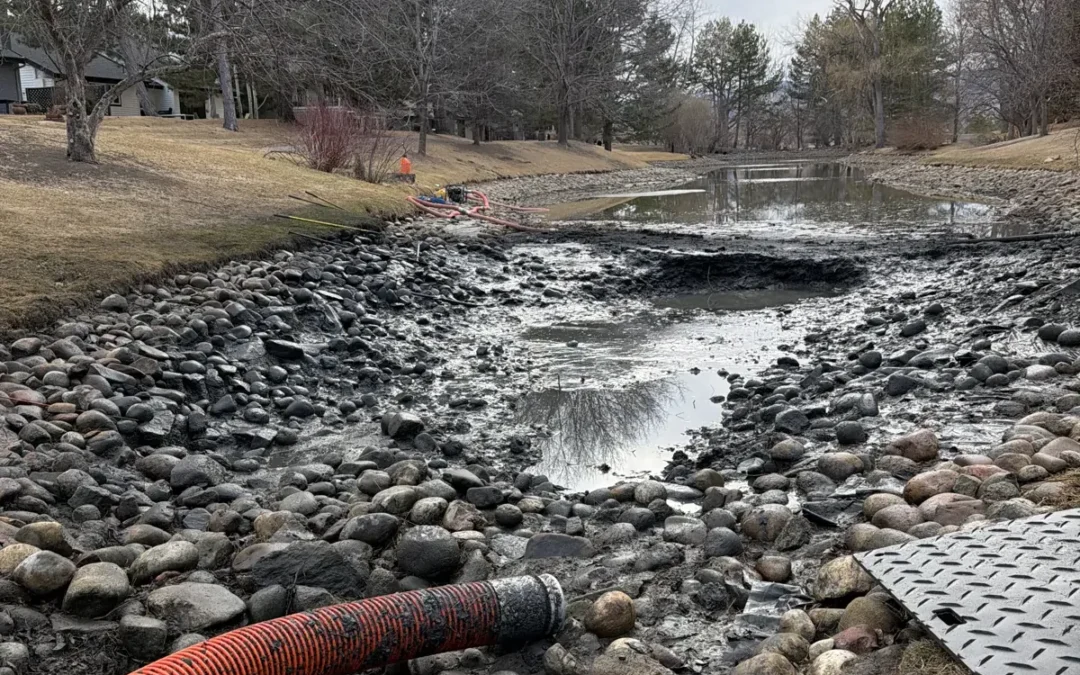
Year after year, that material forms a layer of sediment and organic muck.
As the layer gets thicker, the pond loses depth and water volume. Shallower water can warm more quickly, while decomposing organic matter consumes oxygen and releases nutrients back into the water.
Eventually, property owners may notice:
- Persistent algae blooms
- Murky or discolored water
- Unpleasant odors
- Thick bottom muck
- Excessive aquatic vegetation
- Reduced pond depth
- Areas of stagnant water
These aren’t simply cosmetic issues when the pond is also supplying water elsewhere on the property.
Why Does Pond Water Quality Matter for Gardens?
Using natural pond water for irrigation can reduce reliance on other water sources, but its quality still matters.
Water containing large amounts of suspended sediment can create problems for irrigation equipment, including clogged filters, pumps, nozzles, and drip lines. Heavy algae growth and organic material can make those problems worse.
Water chemistry also matters for plants and soil. Nutrient concentrations, salts, pH, and other characteristics vary considerably between ponds and can influence whether the water is appropriate for a particular irrigation application.
You cannot determine all of those characteristics by looking at the water.
If a pond supplies a vegetable garden or other crops, periodic testing can provide a much clearer picture of water quality and whether the source is appropriate for its intended use.
What About Watering Lawns and Landscaping?
Lawns and ornamental landscaping can also benefit from access to natural pond water, particularly on larger Colorado properties where irrigation demand can be substantial.
But poor pond maintenance can make an otherwise useful resource less reliable.
Sediment accumulation reduces the amount of water the pond can hold. Algae and suspended solids can interfere with irrigation infrastructure, and recurring water-quality problems may increase the amount of maintenance required elsewhere in the system.
Maintaining the pond itself helps protect the infrastructure drawing water from it.
Removing accumulated muck, restoring depth, and addressing excessive organic material can improve the pond’s overall function while helping pumps and irrigation systems operate more reliably.
Is Pond Water Safe for Livestock?
Livestock water deserves particular attention because animals may drink directly from a pond or from tanks supplied by pond water.
A pond that appears usable shouldn’t automatically be assumed to provide appropriate drinking water. Algae, bacteria, minerals, nutrients, sediment, and other water-quality factors can vary throughout the year.
Certain harmful algal blooms can also pose serious risks to animals.
For that reason, water intended for livestock should be monitored and tested as appropriate rather than judged solely by its appearance.
Good pond maintenance cannot replace water-quality testing, but it can address many of the physical conditions that contribute to declining pond health, including excessive sediment, decomposing organic matter, and reduced depth.
Stagnant Water Can Become a Mosquito Problem
A poorly functioning pond can create concerns beyond irrigation and livestock use.
Mosquitoes need remarkably little time to reproduce in suitable standing water. The Delta County Health Department notes that mosquitoes can breed in standing water in as little as four days.
That matters in Colorado because mosquitoes can transmit West Nile virus.
According to Colorado Department of Public Health and Environment data reported by UCHealth in 2026, Colorado recorded 286 human cases of West Nile virus last year, including 20 deaths.
A healthy natural pond is not automatically a mosquito problem. Functional aquatic ecosystems may contain fish, insects, and other organisms that prey on mosquito larvae. The greater concern is stagnant, shallow, poorly maintained water and isolated areas where mosquitoes can reproduce.
Maintaining appropriate pond depth and overall waterbody health should therefore be part of a broader approach to managing standing water around a property.
Sediment Is Often at the Center of Pond Problems
Many pond problems ultimately lead back to what’s happening on the bottom.
Sediment doesn’t simply take up space. Organic muck can contain nutrients that continue cycling back into the water as material decomposes. As a pond becomes progressively shallower, sunlight reaches more of the bottom, potentially encouraging aquatic plant and algae growth.
Simply treating algae at the surface doesn’t remove that accumulated material.
Physical sediment removal addresses the source.
By removing years of accumulated muck, property owners can restore depth and water volume while reducing the reservoir of organic material sitting at the bottom of the pond.
How Can Hydro Excavation Restore a Natural Pond?
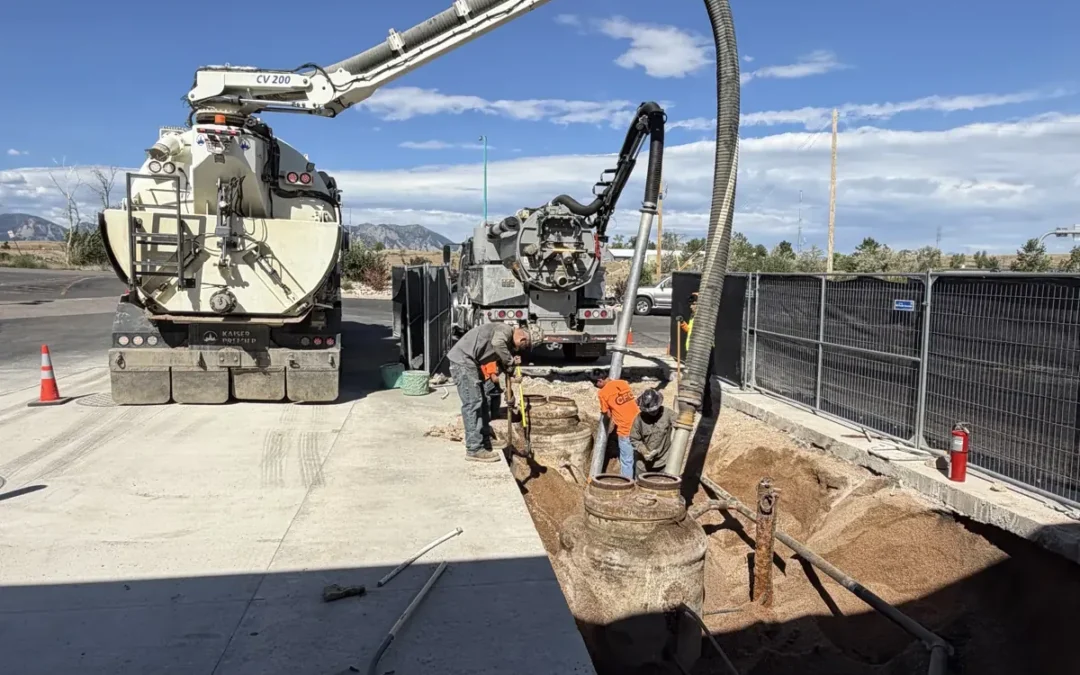
Hydro excavation and suction-based sediment removal offer an effective approach for maintaining natural ponds without relying on conventional excavation throughout the entire waterbody.
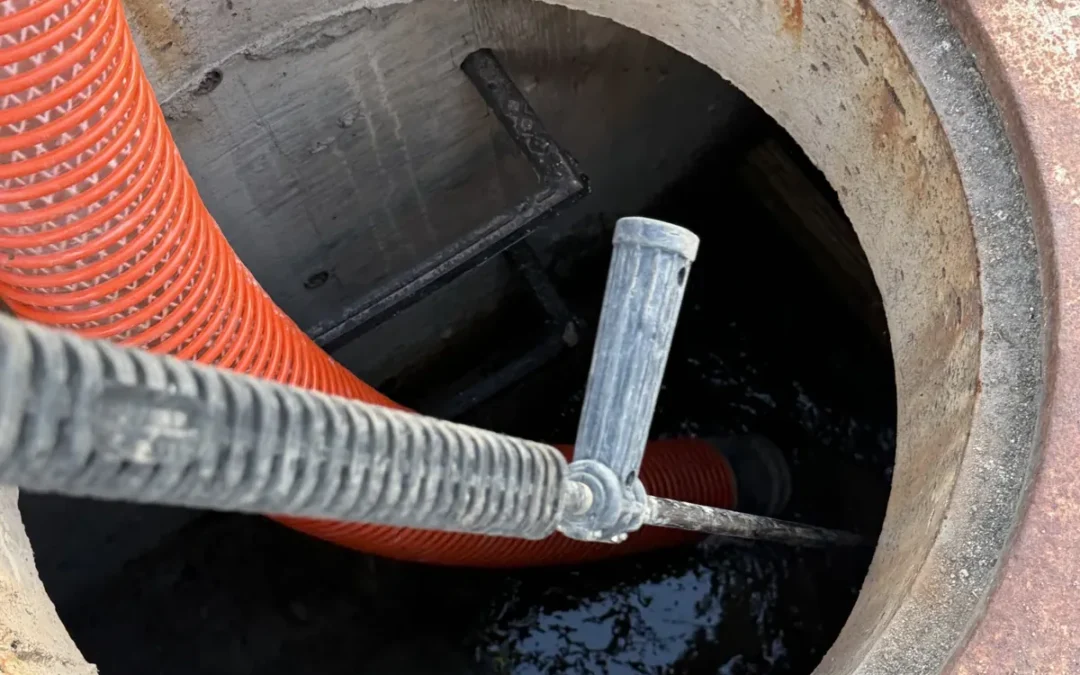
Specialized equipment uses controlled water and powerful vacuum systems to loosen and recover accumulated sediment. The resulting material is removed from the pond and transferred for dewatering and appropriate management.
Depending on the project, this approach can help:
- Restore lost pond depth
- Increase usable water volume
- Remove nutrient-rich organic muck
- Improve circulation
- Reduce suspended sediment
- Protect pumps and irrigation infrastructure
- Improve overall pond conditions
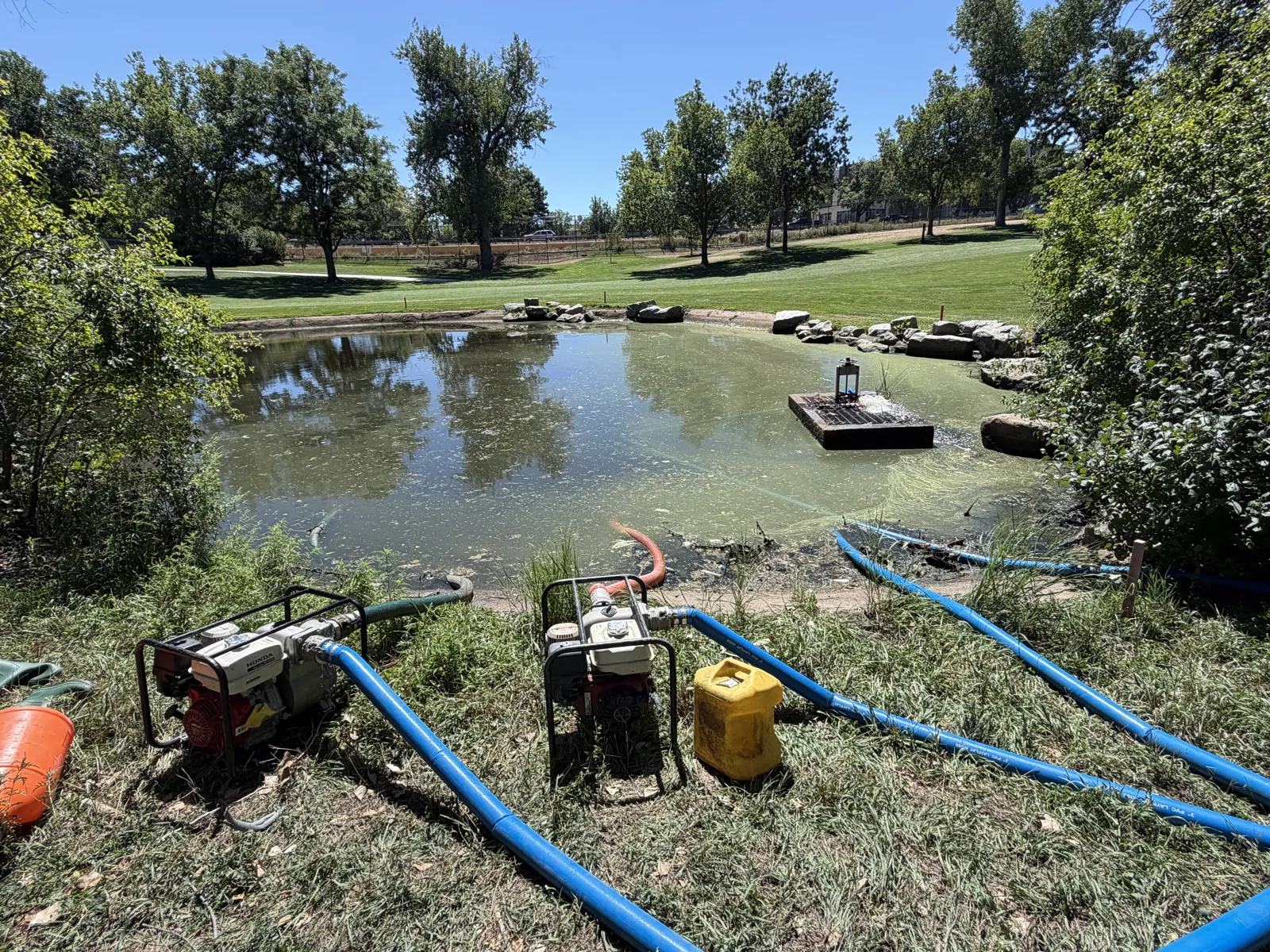
Because material can be removed while water remains in the pond, hydro excavation can also reduce the disruption associated with completely draining a natural waterbody.
Every pond is different, however. Site access, sediment characteristics, aquatic habitat, water use, and environmental requirements should all be evaluated before work begins.
Cleaning and Testing Work Together
One of the most important distinctions for property owners is that clean-looking water and safe water aren’t necessarily the same thing.
Professional pond cleaning addresses physical problems such as sediment buildup, reduced depth, and excessive organic material. Water testing provides information that equipment and visual inspections cannot.
Testing may be appropriate for characteristics such as pH, minerals, nutrients, salts, bacteria, or other parameters, depending on whether the water will be used for gardens, landscaping, or livestock.
Together, testing and proactive maintenance provide a much better foundation for deciding how pond water should be used.
Maintain the Resource You Already Have
For properties that depend on their pond, sediment accumulation represents a gradual loss of a valuable natural resource.
Waiting until a pond is extremely shallow, chronically stagnant, or overwhelmed by muck can turn routine maintenance into a much larger restoration project. Periodic inspections allow property owners to identify sediment accumulation and water-quality changes earlier.
Biolein works with Colorado property owners, agricultural operations, HOAs, land managers, and other organizations to assess and maintain natural ponds. Through hydro excavation, suction sediment removal, pond cleaning, and environmental consultation, our team can remove years of accumulated material while maintaining a strong focus on water quality and environmental stewardship.
If your pond supports your gardens, landscaping, pastures, or livestock, protecting the quality and capacity of that water is worth making part of your property’s regular maintenance plan.
Contact Biolein to schedule an on-site pond assessment and determine whether accumulated sediment is affecting the health, depth, and usability of your natural waterbody.
Frequently Asked Questions
Can I use pond water to irrigate my garden?
Potentially, but the water should be evaluated for its intended use. Sediment, salts, nutrients, bacteria, algae, and other water-quality characteristics can affect irrigation suitability. Testing is especially important when water will be used on edible crops.
Is pond water safe for livestock to drink?
It depends on the pond and its water quality. Visual appearance alone cannot establish whether water is appropriate for livestock. Regular monitoring and appropriate water testing are important, particularly if algae blooms or other changes occur.
Does algae mean my pond water is unsafe?
Not all algae are harmful, but significant or recurring blooms warrant attention. Some harmful algal blooms can pose risks to people and animals, so questionable water should be evaluated rather than assumed to be safe.
Can mosquitoes breed in a natural pond?
Mosquitoes can reproduce in suitable standing water, with the Delta County Health Department noting that breeding can occur in as little as four days. Healthy pond ecosystems can contain natural mosquito predators, while stagnant and poorly maintained areas may provide more favorable breeding conditions.
How does sediment affect pond water quality?
Accumulated sediment reduces depth and storage volume, while organic muck can release nutrients as it decomposes. These conditions can contribute to algae, aquatic plant growth, low oxygen, and declining water quality.
Can hydro excavation clean a pond without draining it?
In many situations, yes. Hydro excavation and suction sediment removal can recover accumulated muck while maintaining water in a natural pond, reducing the disruption associated with completely draining and mechanically excavating the waterbody.
How do I know when my pond needs professional cleaning?
Reduced depth, thick bottom muck, recurring algae, murky water, odors, stagnant areas, and declining usable water volume can all indicate that sediment accumulation deserves attention. An on-site inspection can determine the extent of buildup and whether professional sediment removal is appropriate.

Biolein has become a trusted partner for hydrovac excavation, environmental waste management, environmental consultation for hazardous waste, and drainage solutions across Colorado and beyond. We’re not just an environmental services company in Denver — we’re the team you can count on to tackle the tough jobs and keep things running smoothly.