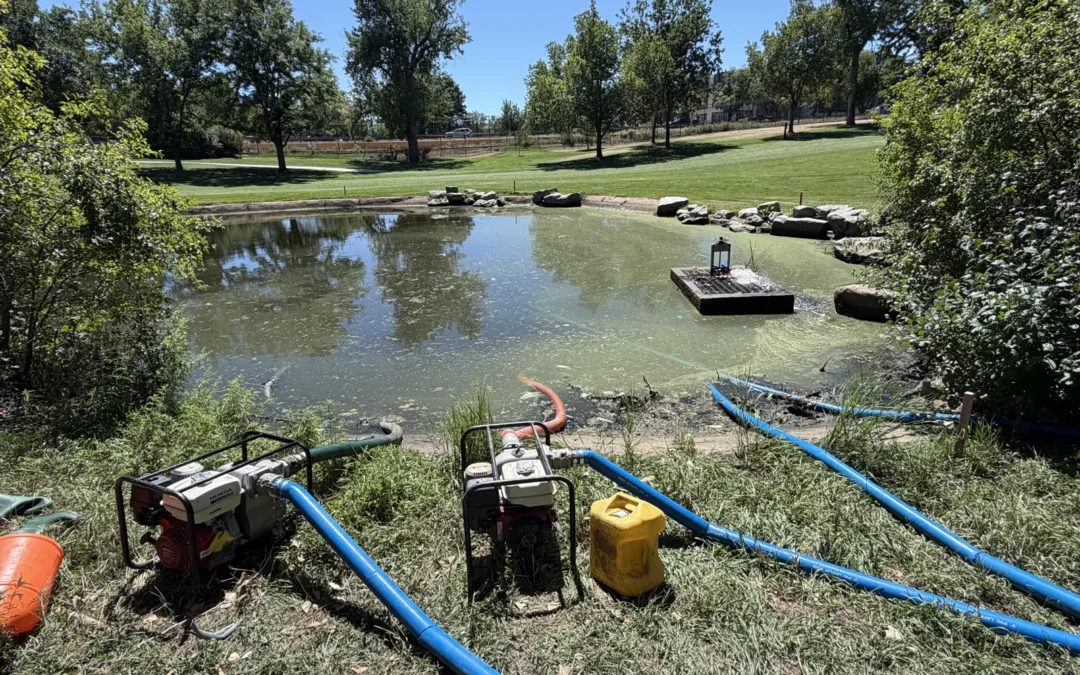
Owning property with a natural pond in Colorado can provide significant benefits. A pond may supply water for irrigation or livestock, support wildlife, improve the surrounding landscape, and become one of the most valuable features of a rural or agricultural property.
But owning the land surrounding a pond does not necessarily mean you have an unrestricted right to store or use the water in it.
Colorado has one of the country’s most established and complex systems of water rights. Before buying property with a pond, building a new pond, changing how an existing pond is used, or investing in a major pond dredge project, property owners should understand what water rights are associated with that waterbody.
Keeping a pond healthy is important. Making sure it’s legally storing and using water should come first.
How Do Colorado Water Rights Work?
Colorado generally follows the prior appropriation system, commonly summarized as “first in time, first in right.”
Rather than automatically giving landowners rights to water simply because it crosses or sits on their property, Colorado water law establishes priorities among water users.
A water right generally establishes a right to use a specific amount of water for an approved beneficial use, subject to its priority and the terms of the applicable decree.
Older, or “senior,” water rights generally have priority over newer, or “junior,” rights when there isn’t enough water available to satisfy everyone.
This system is particularly important in an arid state where water supplies can vary dramatically from one year to another. For pond owners, the important takeaway is simple: having water physically present on your property doesn’t necessarily establish the legal right to store it.
Does a Pond Need a Water Storage Right in Colorado?
This is where many property owners can run into trouble.
If you intend to store water in a pond or reservoir for more than 72 hours, you generally need to adjudicate a water storage right in Water Court. Nazarenus Stack & Wombacher notes that narrow exceptions exist, including certain circumstances involving ponds supplied from municipal water.
The 72-hour distinction is important because temporarily passing water through an irrigation control structure is different from capturing and holding that water in storage. Colorado Water Court records, for example, contain decrees specifically requiring certain irrigation water temporarily held in ponds to be put to beneficial use within 72 hours.
That means a natural pond that has existed on a property for years should not automatically be assumed to have the appropriate storage rights.
Thousands of Colorado Ponds May Lack Storage Rights
This isn’t an obscure issue affecting only a handful of properties.
The firm reports that thousands of ponds and reservoirs in Colorado currently lack water storage rights and are therefore likely storing water illegally. It explains that this often happens when a landowner builds a pond without understanding the state’s water-storage requirements.
A pond without the necessary storage right may be subject to enforcement by the Colorado State Engineer’s Office.
For someone purchasing rural property, this makes water-right due diligence particularly important. A beautiful pond can add substantial appeal to a property, but buyers should determine whether the pond itself is legally storing water rather than assuming its age or existence establishes its legality.
What Should You Verify About Your Pond?
If you own or are considering purchasing property with a pond, start by understanding its history.
Questions worth investigating include:
- Does the pond have a decreed water storage right?
- Where does its water originate?
- What uses are authorized by the applicable water rights?
- Is the pond subject to an augmentation plan or other requirements?
- Are there restrictions on how long water can be held?
- Are irrigation or livestock uses legally authorized?
- Are there measurement, release, or accounting requirements?
- Have previous owners modified the pond?
For questions about a specific property’s legal rights or obligations, a qualified Colorado water attorney or appropriate state water official should be consulted.
Water Rights Matter When Your Pond Supports Irrigation
A pond can be extremely useful for storing and distributing irrigation water, but the intended use of that water matters.
A property owner shouldn’t assume that because a pond contains water, that water can automatically be pumped onto lawns, gardens, fields, or pastures.
The underlying water right and decree may define how water can be stored and put to beneficial use.
Before expanding an irrigation system or changing how pond water is used, verify that the proposed use is consistent with the applicable rights.
This is particularly important before investing in pumps, irrigation infrastructure, or significant pond restoration.
The Same Applies to Livestock Water
Natural ponds are also commonly used as part of agricultural and livestock operations.
Here again, both legal authorization and water quality deserve attention.
Owners should confirm that their water rights support the intended use while also monitoring whether the pond remains healthy enough to serve as a dependable water resource.
Sediment, algae, organic debris, and nutrient accumulation can gradually reduce depth and usable water volume. Water intended for livestock should also be appropriately tested rather than assumed to be suitable based on appearance alone.
A legally authorized pond still needs physical maintenance to remain a useful resource.
Where Pond Dredging Fits Into Long-Term Management
Once you’ve established the legal status of your pond, maintaining its physical capacity becomes the next challenge.
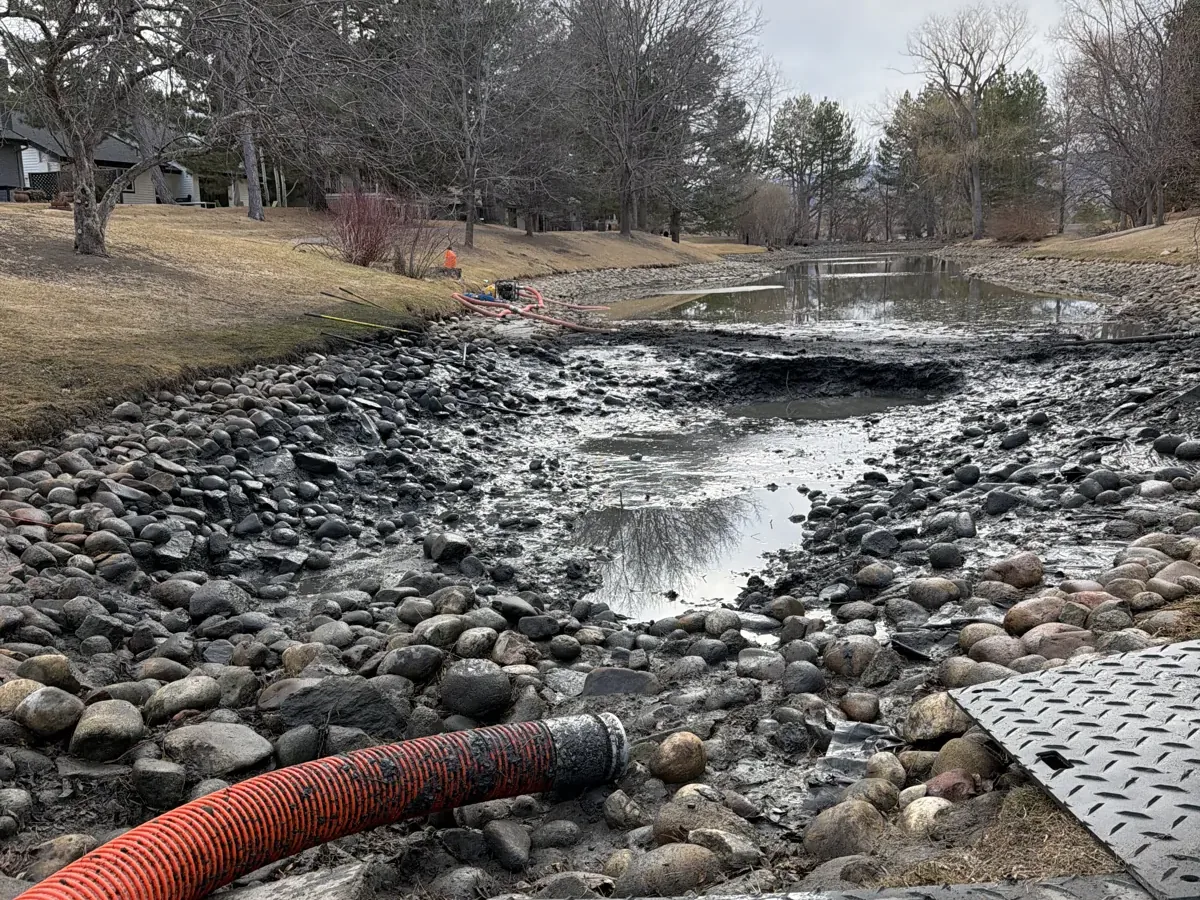
Natural ponds continually collect sediment. Runoff carries soil into the waterbody, while leaves, aquatic vegetation, algae, and other organic materials settle to the bottom.
Eventually, a pond that is legally authorized to store a certain amount of water may physically hold less water because accumulated sediment has displaced part of its usable volume.
A professional pond dredge or sediment-removal project can help restore lost depth and capacity.
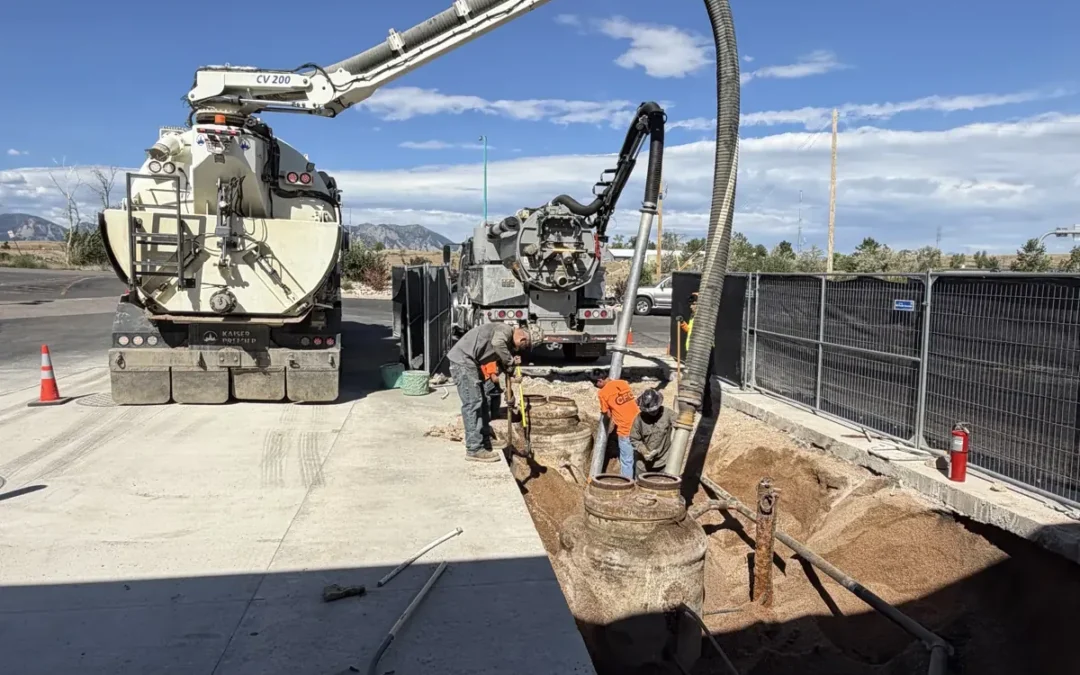
Hydro excavation and suction dredging can remove accumulated muck from natural ponds without necessarily requiring the entire waterbody to be drained. This approach can reduce disturbance while removing nutrient-rich sediment that contributes to declining water quality.
Don’t Dredge Before Understanding the Pond
Before beginning a major dredging project, however, owners should understand both the physical and legal characteristics of the pond.
Changing pond dimensions, storage capacity, outlet structures, or other features may have implications beyond routine maintenance.
That’s why the best pond-management strategy starts with information.
First, establish what rights and requirements apply to the pond. Then evaluate sediment depth, water quality, shoreline conditions, inflows and outflows, and the way the pond is currently being used. From there, property owners can make better decisions about cleaning and restoration.
A Legal Pond Should Also Be a Healthy Pond
Water rights determine whether and how water may legally be stored and used. Pond maintenance determines whether the physical waterbody can continue doing its job.
Both deserve attention.
Biolein helps Colorado property owners, agricultural operations, HOAs, land managers, and other organizations maintain natural ponds and waterbodies through on-site assessments, hydro excavation, suction sediment removal, pond dredging, and environmental consultation.
While Biolein does not provide legal advice or adjudicate water rights, understanding a pond’s legal status before undertaking significant restoration can help owners make better long-term investments in their water resources.
If years of sediment accumulation have reduced the depth, capacity, or water quality of your natural pond, contact Biolein to schedule an on-site assessment and determine whether pond dredging or hydro excavation can help restore its function.
Frequently Asked Questions
Do I automatically own the water in a pond on my Colorado property?
No. Ownership of the surrounding land does not necessarily provide an unrestricted right to store or use the water. Colorado’s prior-appropriation system governs water rights separately from land ownership.
Does my Colorado pond need a water storage right?
Generally, water stored in a pond or reservoir for more than 72 hours requires an adjudicated storage right, although limited exceptions may apply. Because individual circumstances differ, owners should verify their pond’s status with the appropriate state resources or a Colorado water attorney.
What does the 72-hour rule mean?
The 72-hour issue generally distinguishes certain temporary holding of water from longer-term storage. Colorado Water Court decrees demonstrate that water temporarily held in some irrigation-control ponds must be placed to beneficial use within 72 hours rather than retained indefinitely.
How can I find out whether my pond has a water right?
Colorado water-right records can be researched through state resources such as the Division of Water Resources Map Viewer. If ownership, decrees, allowable uses, or storage rights are unclear, consider consulting a qualified Colorado water attorney.
Can I use pond water to irrigate my property or water livestock?
Only if the applicable water rights and other requirements authorize the intended use. Don’t assume that water can be used simply because it is physically located on your property.
What is a pond dredge?
Pond dredging removes sediment, muck, and organic material that have accumulated on the bottom of a pond. Depending on site conditions, hydro excavation and suction dredging can remove this material while maintaining water within the natural pond.
Why does sediment removal matter for a storage pond?
Sediment gradually consumes physical storage volume. Removing accumulated material can restore depth and capacity while reducing nutrient-rich muck that may contribute to algae and declining water quality.
Should I verify water rights before dredging my pond?
Yes. If you’re considering significant work on a Colorado pond, understanding its legal status, authorized storage, permitted uses, and other applicable requirements before beginning the project is a sensible first step. Major modifications may warrant professional legal and regulatory guidance.

Biolein has become a trusted partner for hydrovac excavation, environmental waste management, environmental consultation for hazardous waste, and drainage solutions across Colorado and beyond. We’re not just an environmental services company in Denver — we’re the team you can count on to tackle the tough jobs and keep things running smoothly.