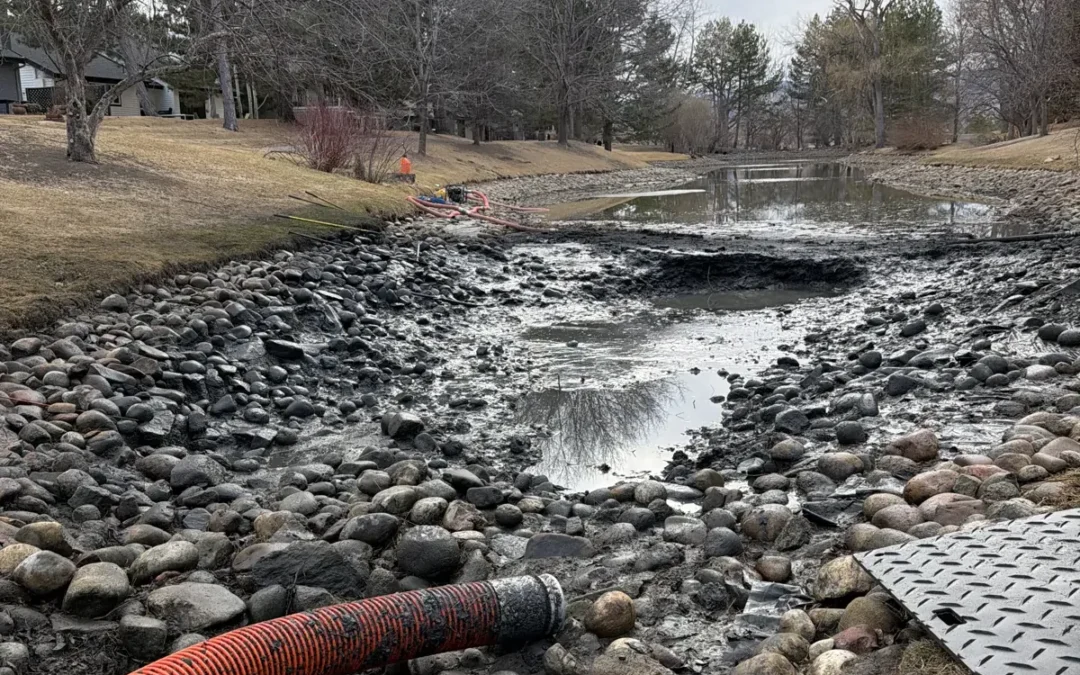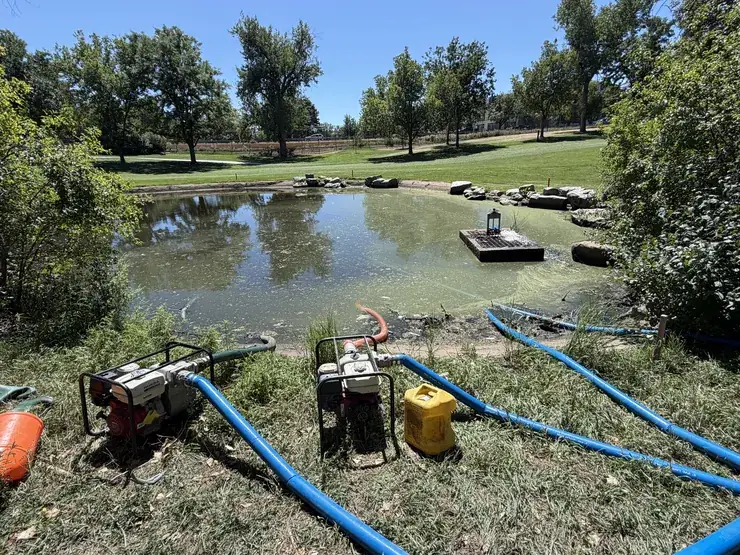
If you’re researching pond dredging costs in Colorado, you’ve probably discovered that getting a straightforward price isn’t easy. That’s because no two natural ponds are exactly alike. A small pond with several feet of accumulated muck may require more work than a much larger pond with only a thin layer of sediment.
For property owners, HOAs, agricultural operations, and commercial property managers, understanding what drives dredging costs can make it easier to compare contractor quotes and plan a project that delivers lasting value.
Whether you’re considering traditional excavation or hydro excavation and suction dredging, the goal is the same: restore your pond’s depth, capacity, and overall health without unnecessary expense or environmental disruption.
What Determines Pond Dredging Costs in Colorado?
Pond dredging isn’t typically priced by surface area alone. Contractors must consider the amount of sediment being removed, equipment requirements, site accessibility, and how recovered material will be managed.
Several factors have the greatest influence on the final project cost.
Pond Size and Sediment Depth
One of the biggest cost drivers is the total volume of sediment that needs to be removed. Contractors generally estimate dredging quantities in cubic yards. A pond with a relatively small surface area but several feet of accumulated muck can require substantial sediment removal.
For example, removing one foot of sediment across one acre represents approximately 1,613 cubic yards of material. That’s a considerable amount of material to recover, dewater, transport, or manage on-site.
Accurate measurements are essential because the amount of sediment removed directly affects equipment time, labor, and material-handling requirements.
Equipment Access and Site Conditions
Access can make a significant difference in dredging costs. A pond surrounded by open, stable ground may be relatively straightforward to service. A pond with steep banks, mature trees, limited access roads, or sensitive landscaping may require specialized equipment and additional planning.
Contractors must consider where trucks can park, how far hoses must reach, and whether equipment can safely operate near the shoreline.
Colorado’s terrain can introduce additional challenges, particularly on properties with steep slopes, soft soils, or limited access.
Wet Dredging vs. Draining the Pond
Another major consideration is whether the pond must be drained before sediment removal. Traditional excavation may require lowering or removing water so heavy equipment can reach the pond bottom.
That can add time and expense associated with water management, temporary access, excavation, and restoring the pond afterward. Hydro dredging and suction dredging can often remove accumulated sediment while the pond remains filled.
Although wet dredging requires specialized equipment and slurry management, avoiding a complete drain-down may reduce other project expenses and minimize disruption to aquatic habitat.
Comparing Pond Dredging Methods
Different dredging methods have different advantages. Understanding those differences can help property owners evaluate quotes based on the work being performed rather than price alone.
| Method | How It Works | Cost Considerations |
|---|---|---|
| Hydro/Suction Dredging | Uses vacuum or pumping equipment to recover submerged sediment while the pond retains water | Specialized equipment, slurry volume, dewatering, and hose access |
| Mechanical Excavator Dredging | Uses excavators to remove sediment directly from accessible areas | Equipment access, shoreline disturbance, material handling, and hauling |
| Drain and Excavate | Lowers or drains the pond before excavating accumulated sediment | Water management, drying time, equipment access, excavation, and restoration |
| Combined Approach | Uses suction dredging and mechanical excavation in different areas | Additional coordination, but potentially more efficient for large or complex projects |
When Does Hydro Dredging Make Sense?
Hydro dredging is particularly useful when a natural pond needs sediment removal without completely draining the waterbody.
It can also be advantageous when the project involves soft organic muck, limited shoreline access, or areas where minimizing disturbance is important.
However, hydro dredging isn’t automatically the least expensive option. Pumping sediment as a slurry introduces additional water that must be managed, and some materials may be better suited to mechanical removal.
When Is Mechanical Dredging More Practical?
Mechanical excavation may be appropriate when a pond has accessible banks, relatively dry sediment, or large quantities of material that can be removed efficiently with conventional equipment.
For larger natural ponds, combining mechanical excavation with suction dredging may provide the most practical solution.
An experienced contractor can evaluate which approach offers the best balance of cost, efficiency, and environmental protection.
Sediment Dewatering, Hauling, and Disposal
Removing sediment from the pond is only part of the project. Recovered material must also be managed appropriately, and this can represent a significant portion of the overall cost.
Hydro dredging typically produces a slurry containing both sediment and water. Before that material can be transported or reused, it may need to be dewatered.
Dewatering allows excess water to separate from the solids, reducing the volume and weight of material requiring further handling. Once dewatered, sediment may be hauled to an approved facility or evaluated for beneficial reuse.
In some situations, suitable sediment can be reused on-site for landscaping, soil improvement, or other approved applications. However, testing, site conditions, and applicable regulations determine whether reuse is appropriate.
On-site reuse may reduce hauling and disposal costs, but it should never be assumed that all dredged sediment is suitable for land application.
Permitting and Colorado Water Rights Considerations
Before dredging a natural pond, property owners should also understand the regulatory requirements that may apply.
Depending on the pond’s location, water source, connection to other waterways, and proposed work, permits or additional approvals may be necessary. Colorado water rights are another important consideration.
Owning land surrounding a pond doesn’t automatically establish the right to store or use the water. Significant changes to pond dimensions or storage capacity may also require additional review.
Our guide to Colorado water rights and pond ownership explains important questions property owners should verify before beginning a restoration project. Addressing these considerations early can help prevent costly delays once work is underway.
How Often Does a Pond Need Dredging?
Dredging frequency varies considerably. A pond receiving heavy sediment runoff from surrounding land may require attention more frequently than one with a stable watershed and limited sediment inputs.
Factors influencing maintenance frequency include erosion, surrounding vegetation, stormwater inflows, agricultural activity, and previous cleaning history. Routine inspections and sediment measurements can help property owners determine when dredging is necessary.
Waiting until a pond becomes severely shallow may increase the volume of material requiring removal. In some situations, smaller, targeted cleanouts can be more manageable than postponing maintenance for many years.
For ongoing care, professional pond cleaning services in Denver can help identify sediment accumulation and other developing issues before they become major restoration projects.
How to Get an Accurate Pond Dredging Quote
A reliable estimate starts with understanding the actual conditions of your pond.
Before contacting a contractor, gather the following information if available:
- Pond dimensions: Approximate length, width, surface area, and known depth.
- Photos: Current pictures showing the pond, shoreline, and surrounding property.
- Equipment access: Notes about roads, gates, slopes, trees, and potential staging areas.
- Maintenance history: The approximate date of the last dredging or major cleaning.
This information helps contractors prepare for an initial discussion, but it shouldn’t replace an on-site assessment.
At Biolein, we believe accurate project planning requires evaluating the pond in person. Sediment depth, access limitations, material characteristics, and water-management requirements all influence the equipment and approach needed.
A thorough assessment helps establish realistic expectations and reduces the likelihood of unexpected project costs.
Choosing Long-Term Value Over the Lowest Quote
The cheapest pond dredging quote isn’t necessarily the best value. A lower estimate may exclude important services such as dewatering, sediment hauling, disposal, restoration, or project management.
When comparing proposals, ask what work is included, how sediment quantities are estimated, and what happens to the recovered material. The right contractor should be able to explain the proposed approach and why it makes sense for your particular pond.
Restore Your Pond With a Plan That Makes Sense
Pond dredging is an investment in the long-term function of your property. Removing accumulated sediment restores valuable water depth, supports healthier aquatic conditions, and helps protect the pond’s intended purpose.
Biolein works with Colorado property owners, HOAs, municipalities, agricultural operations, and land managers to evaluate natural ponds and develop practical sediment-removal solutions.
Our team brings specialized hydro excavation and vacuum equipment, environmental expertise, and on-site project management to each project. Rather than recommending a one-size-fits-all approach, we evaluate site conditions and determine the most appropriate cleaning method.
Contact Biolein to schedule an on-site pond assessment and discuss a dredging solution tailored to your property’s needs.
Frequently Asked Questions
How much does pond dredging cost in Colorado?
Pond dredging costs depend on sediment volume, pond size, access, equipment requirements, dewatering, hauling, and disposal. An on-site evaluation is the best way to develop an accurate estimate.
Is hydro dredging cheaper than traditional dredging?
Not necessarily. Hydro dredging may reduce expenses associated with draining a pond and restoring disturbed areas, but specialized equipment and slurry management also affect costs. The most economical method depends on site conditions.
Can a pond be dredged without draining it?
Yes. Hydro excavation and suction dredging can often remove accumulated sediment while maintaining water in a natural pond. This may reduce disruption to aquatic habitat and surrounding areas.
What is the most expensive part of pond dredging?
The largest expense varies by project. Sediment volume, equipment access, dewatering, hauling, and disposal can all significantly influence total costs.
Can dredged pond sediment be reused?
Sometimes. Dewatered sediment may be suitable for landscaping or soil improvement if testing confirms its suitability and applicable regulations allow reuse.
How often should a natural pond be dredged?
There is no universal schedule. Sediment accumulation depends on watershed conditions, runoff, erosion, and surrounding land use. Periodic inspections help determine when dredging is necessary.
Do I need permits to dredge my pond in Colorado?
Potentially. Permitting requirements depend on the pond’s characteristics, location, water rights, and proposed work. Property owners should verify applicable requirements before beginning significant dredging activities.
How can I get a pond dredging estimate from Biolein?
You can contact Biolein with your pond’s approximate dimensions, photos, access information, and maintenance history. Our team can then arrange an on-site assessment to evaluate sediment conditions and recommend an appropriate dredging approach.

Biolein has become a trusted partner for hydrovac excavation, environmental waste management, environmental consultation for hazardous waste, and drainage solutions across Colorado and beyond. We’re not just an environmental services company in Denver — we’re the team you can count on to tackle the tough jobs and keep things running smoothly.